


Wuxi Dongxia Machinery Co., Ltd. is one of the most professional manufacturers and suppliers of portable heat pump unit in China. Please feel free to buy OEM portable heat pump unit at competitive price from our factory. For custom service, contact us now.
Company Profile
As the predecessor of Dongxia, Taihu Cooling and Heating Equipment Co., Ltd. was established in the 1990s. At first, the company produced "Dongxia" brand air conditioners. Later, present-day Wuxi Dongxia Machinery Co., Ltd. ("Dongxia") was established as a joint venture between Taihu Cooling and Heating Equipment Co., Ltd. and Nakatomi, Japan.
In the past 20 years since the establishment of "Dongxia" brand, Dongxia has been focusing on air conditioning and processing industry. Now, the main products of Dongxia include: portable industrial air conditioner, industrial dehumidifier, mobile electric heater, fuel-fired heater, etc. Dongxia operates such brands as "Dongxia", "Winter-Summer" and "Nakatomi", providing aid for the cooling of summer employees, products, precision equipment, outdoor operation and other industrial environments.
Why choose us?
Broad market
Our company's products are sold to dozens of countries and regions such as Japan, the United States, Australia, New Zealand, Thailand, Vietnam, Russia, Hong Kong, and Taiwan. With professional and excellent product performance and reliable quality assurance, our company has effectively cooperated with many Fortune 500 companies and has been designated as an exclusive purchasing brand by them.
Professional team
We have a technical team with more than 15 years of product development experience. Our team has always insisted on absorbing the latest technology, and we have committed to improving product performance and extending product service life.
Advanced equipment
We have professional equipment and working environments such as automatic assembly lines, automatic painting lines, and air conditioner performance testing laboratories.
Professional certification
Our products have obtained more than ten national patents and passed a series of certifications such as American ETL, Japanese PSE, European Union CE, and Chinese CCC.
24h online service
We provide 24-hour online service, if you have any questions you can contact us at any time.
Competitive price
Our products are available at factory-direct prices and are of high quality and affordable price.
Related Product

Portable Heat Pump And Cooling Unit
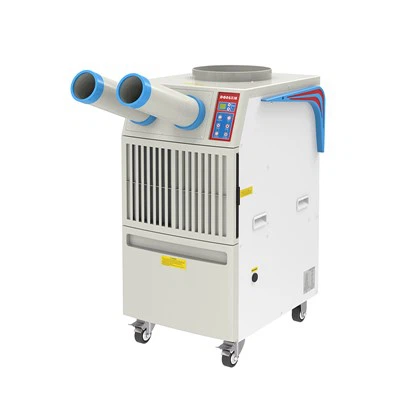
The portable heat pump and cooling unit Model SAC-35HC delivers 11500Btu/h of cooling(or 10300Btu/h of heating) relief with footprint under 6 sq. ft.

Portable Heat Pump Air Conditioner
The Portable heat pump air conditioners are versatile appliances that can be used in various settings.

If you need a portable heat pump AC Manufacturer & Long-Term Oversea Partner,Please contact Dongxia for further questions.

The outdoor heat pump and cooling unit Model SAC-35HC delivers 11500Btu/h of cooling(or 10300Btu/h of heating) relief with footprint under 6 sq. ft.

The Portable heat pump air conditioners are versatile appliances that can be used in various settings.
What is Portable Heat Pump Unit
A portable heat pump can both heat and cool a room, so you can replace an air conditioner and a space heater with a single unit. Portable heat pumps-sometimes marketed as "portable air conditioners"-need minimal installation and can be moved from room to room. They're perfect for year-round use in a tiny house, a summer cabin, a studio apartment, or a single room.
Sustainability
Heat pumps are a more sustainable option for space heating since they do not burn fossil fuels. Plus, as the electrical grid relies more on renewable energy, the electricity they use keeps getting cleaner.
Low maintenance
Heat pumps of all types are easy to clean and maintain. Heat pumps filter the air of dust, bacteria, and viruses (depending on the model) and need only a quick clean with a vacuum once a month.
Also, portable heat pumps require little installation or ductwork compared to whole-house heat pumps. They run on regular household electricity. For RVs, 12-volt heat pumps exist.
Safety
Portable heat pumps have a minor burn or fire risk compared to furnaces and radiators. Nothing is being combusted and there are no metal radiators that become too hot to touch.
Noise
Heat pumps are generally quieter than traditional air conditioners or furnaces. Rather than going on and off to maintain proper room temperature, heat pumps are most efficient at maintaining a regular stream of cool or warm air.
Tech-friendly
Many heat pumps have internet-enabled controllers that allow you to use an app on your phone. You can, for example, pre-heat your studio apartment before you leave work so that you come home to a warm or cool house.
Types of Portable Heat Pump Unit
Dual-hose heat pumps
The dual-hose portable heating pump sucks in indoor air and transports it to other indoor spaces through an exhaust system. This heating alternative is more costly than others and is beneficial for sizeable areas.
Single-hose heat pumps
Single-hose portable heat pumps have one hose that extends outdoors to heat and cools your indoor spaces with a compressor. This type of portable heat pump is one of the most economical choices on the market and is suitable for heating and cooling small spaces.
Application of Portable Heat Pump Unit
Offices
You can use a Heat Pump portable air conditioner to cool or heat your office space, especially if your existing system is not working properly or is insufficient for your needs. A Heat Pump portable air conditioner can also help you create a comfortable environment for your employees and clients, improving productivity and satisfaction.
Data centres
You can use a Heat Pump portable air conditioner to protect your sensitive equipment from overheating or freezing, which can cause damage or data loss. A Heat Pump portable air conditioner can also help you maintain optimal temperature and humidity levels for your servers, computers and other devices.
Aged care facilities
You can use a Heat Pump portable air conditioner to provide comfort and safety for your residents, especially those who are vulnerable to extreme temperatures. A Heat Pump portable air conditioner can also help you prevent health issues such as dehydration, heatstroke or hypothermia.
Retail environments
You can use a Heat Pump portable air conditioner to attract and retain customers, especially during hot or cold seasons. A Heat Pump portable air conditioner can also help you display your products in the best possible way, enhancing their quality and appeal.
Working Principle of Portable Heat Pump Unit
Portable heat pumps work just like any other heat pump – in that through compressing and condensing air, heat can be extracted and then used to heat your home. To cool it, a refrigerant is compressed and blown through the condenser, cooling it down and helping it absorb heat from the indoor area.
Whether heating or cooling, portable heat pumps work on the same principles as all other heat pumps, except that their exhaust pipe is attached and needs to be put out of a window – similar to some tumble driers. And, of course, a portable heat pump is portable, meaning it can be pushed from room to room to be used in different places, focusing heating or cooling on a specific room, rather than your whole house.
Components of Portable Heat Pump Unit
Compressor
An important component of a heat pump is the compressor. The refrigerant is compressed to very high pressures in the compressor, while its temperature is also raised. When the refrigerant enters a compressor, it is in a gaseous state at low pressure and low temperature and exits the compressor at high pressure and high temperature in a gaseous state.
Condenser
The next important component of a heat pump is the condenser. Heating is one of the functions of a heat pump, and the condenser produces this effect inside a room. The refrigerator's main function is to cool the substance or material, and the evaporator produces this effect. Whereas the evaporator is the main component in refrigerators that produces cooling, the condenser is the main component in heat pumps that produces heating. An air conditioner's condenser is located outside the room that must be cooled, but a heat pump's condenser is located inside the room.
Expansion valve
The expansion valve reduces pressure. The refrigerant entering the expansion valve at high pressure and medium temperature suddenly experiences a decrease in pressure and temperature. In heat pumps, copper capillary tubes are the most common expansion valves. Expansion valves release refrigerants in partially liquid and partially gaseous states when pressure and temperature are extremely low.
Evaporator
Air conditioners have their evaporators inside the room, but heat pumps have their evaporators outside the room and are exposed to the local atmosphere, which is extremely cold. The copper coil also makes up the evaporator, just like the condenser. By entering the evaporator coil at low pressure and low temperature, the refrigerant drastically reduces the coil's temperature to an even lower level than the atmospheric temperature.
Refrigerant
In addition to the four essential components, the refrigerant is another equally important part of a heat pump. Heat pumps use the same refrigerant as refrigerators and air conditioners. Chlorofluorohydrocarbons are among the most common refrigerants, but a variety of other alternatives have also been discovered.
Accumulator
An accumulator is another component found in most heat pumps. This tank may be visible if you follow the compressor suction line downward from the compressor. Its purpose is to hold any liquid surge before getting to the compressor. The accumulator collects the excess liquid refrigerant that did not evaporate in the evaporator. In this case, the liquid will boil off and become a vapor, which can be safely returned to the compressor. If the liquid were to enter the compressor, it would cause damage. Not every brand and model has an accumulator.
Regular maintenance of your heat pump can extend the life of the system and prevent interruptions and breakdowns. It also helps to ensure the system is providing adequate heating and cooling for your home.
Change the air filter regularly
The air filter in your heat pump should be changed every one to three months, depending on the type of filter and how often you use your system.
Clean the outdoor unit
The outdoor unit of your heat pump should be cleaned at least once a year to remove dirt, leaves, and other debris that can accumulate over time.
Check for refrigerant leaks
Refrigerant leaks can cause your heat pump to run inefficiently and cause your energy bills to skyrocket. Have a professional check for any leaks and repair them as soon as possible if you see dramatic fluctuations in your utilities without changes to your heating and cooling habits.
Inspect the ductwork
If you have a ducted heat pump, make sure that all the ducts in your home are properly sealed and insulated to ensure that your heat pump is running efficiently.
Schedule regular maintenance
Have a professional inspect and service your heat pump at least once a year to ensure that it is running properly and efficiently.
How to Choose the Right Portable Heat Pump Unit



Home size
The capacity of a heat pump to efficiently heat and cool a house is proportional to its square footage. In order to keep the temperature acceptable throughout, larger houses often need greater heating and cooling capacity. On the other side, heat pumps that are too big for a home can lead to major heating and cooling inefficiencies. If you want your heat pump to work as efficiently as possible while also meeting your home's unique heating and cooling demands, it's important to get the size right by measuring the square footage of your property.
Climate
The climate in an area significantly influences the size of the heat pump needed for a home. Colder climates require larger heat pumps to meet increased heating demands, ensuring efficient and effective performance during winter. Warmer climates may necessitate smaller units as cooling demands take precedence. Properly sizing the heat pump based on the local climate ensures optimal efficiency, comfort and cost-effectiveness. A professional technician can assess your area's regional weather patterns to determine the size of heat pump your home needs.
Insulation
A home's insulation directly impacts the size of the heat pump required. Well-insulated homes typically retain heat better, reducing the load on the heat pump. Consequently, a smaller unit may suffice to achieve the desired heating and cooling levels. In contrast, poorly insulated homes experience greater heat loss, necessitating a larger heat pump. Properly considering the insulation levels ensures the heat pump is appropriately sized for energy efficiency and effective temperature control.
Windows and doors
The number and efficiency of a home's windows and doors significantly affect the size of the required heat pump. Well-insulated, energy-efficient windows and doors minimize heat gain or loss, allowing for a smaller heat pump. Conversely, drafty or inefficient openings may demand a larger unit to compensate for increased heat exchange. By taking these factors into account, you can be confident that the heat pump will be appropriately suited to handle the unique heating and cooling needs of your house.
Ceiling height
Ceiling heights in a home impact the size of the heat pump needed for efficient temperature control. Taller ceilings increase the volume of the space, requiring a larger heat pump to effectively heat or cool the air. Properly sizing the heat pump according to the ceiling height ensures adequate airflow and even temperature distribution. This consideration is crucial for maintaining comfort throughout the home and optimizing the performance of the HVAC system.
Ductwork
To get the most out of your heat pump, you need to make sure its dimensions are compatible with your ducting. When calculating the necessary size of a heat pump, the state and configuration of a home's ductwork are crucial factors. Airflow that is both efficient and well-maintained in the home's duct system enables a heat pump of the appropriate size to cool or heat the air throughout the house with consistent efficiency. Inadequate or improperly designed ducting causes inefficiencies, which in turn means your home needs a bigger heat pump to make up for the reduced airflow.
Energy-efficiency
How big of a heat pump a house needs is proportional to its energy efficiency. If your house is energy efficient and has good insulation, you may be able to get away with a smaller unit to keep the temperature you want. The inverse is also true: bigger heat pumps may be necessary for less energy-efficient dwellings due to higher heat loss or gain.
Orientation
To maximize energy efficiency and account for differences in sunlight exposure, it is important to properly evaluate the home's orientation when sizing the heat pump. This will provide optimal temperature regulation. As a result of greater heat uptake in the south, a bigger unit may be necessary for residences facing south, whereas a smaller one may be sufficient for those facing north.
Air filtration
A home's air filtration system can impact the size of the required heat pump. High-efficiency air filtration systems contribute to cleaner air, reducing the load on the heat pump. With improved airflow and minimized dust, a smaller, appropriately sized unit may suffice. On the other hand, poor air filtration leads to increased strain on the heat pump, requiring a larger unit to compensate. Proper air filtration ensures the heat pump operates efficiently, contributing to overall system performance.
Occupancy
Properly sizing the heat pump based on the number of occupants ensures efficient temperature control and prevents an undersized unit from struggling to maintain comfort levels in a more populated home. More occupants generate additional heat through daily activities, affecting the overall heating and cooling load. Homes with larger families or frequent guests may require a larger heat pump to meet the increased demand.
Certifications

Our Factory
The production and operation headquarters of Dongxia in China are located in Wuxi, Jiangsu Province, within 2 hours of driving from Shanghai. It has a 30000 ㎡ modern plant warehouse, full-automatic assembly lines and testing equipment, and a huge technical R&D team, with an annual production capacity of 200,000 air-conditioners. It has obtained more than ten national patents and has passed a series of certifications such as ETL of the United States, PSE of Japan, CE of the European Union and CCC of China.


FAQ
Hot Tags: portable heat pump unit, China portable heat pump unit manufacturers, suppliers, factory, Portable Air Conditioners, heat pump spot cooler for restaurant, heat pump spot cooler for workshop, heat pump spot cooler for exhibition hall, heat pump spot cooler for residential use, heat pump spot cooler for 24 7 cooling





