


Hey there! I'm a supplier of water and air cooled systems, and I've been in this industry for quite a while. One question that often comes up from our customers is how these cooling systems respond to sudden load changes. Well, let's dive right in and explore this topic.
Understanding Load Changes
First off, what do we mean by "load changes"? In the context of cooling systems, a load change refers to an abrupt increase or decrease in the amount of heat that the system needs to remove. This can happen for various reasons. For example, in a manufacturing plant, a sudden increase in the number of machines operating at full capacity can generate a lot more heat, thus increasing the cooling load. On the other hand, shutting down some equipment can lead to a decrease in the load.
How Air Cooled Systems Respond
Air cooled systems are quite common, and they're used in a wide range of applications, from small offices to large industrial facilities. These systems work by using fans to blow air over a heat exchanger, which transfers the heat from the refrigerant to the air.
When there's a sudden increase in the load, air cooled systems typically respond in a few ways. The first thing that happens is that the temperature of the refrigerant in the system starts to rise. As the refrigerant temperature goes up, the pressure also increases. The system's sensors detect this change and send a signal to the compressor. The compressor then ramps up its speed to increase the flow of refrigerant through the system, which helps to remove more heat.
At the same time, the fans in the air cooled condenser also increase their speed. This allows more air to flow over the heat exchanger, which enhances the heat transfer process. However, there are limits to how much the compressor and fans can increase their speed. If the load increase is too large and sudden, the system might not be able to keep up immediately. This can result in a temporary rise in the temperature of the space being cooled.
On the flip side, when there's a sudden decrease in the load, the opposite happens. The refrigerant temperature and pressure start to drop. The sensors detect this and signal the compressor to slow down. The fans in the condenser also reduce their speed to match the lower heat transfer requirements. This helps to save energy, as the system doesn't need to work as hard when the load is lower.
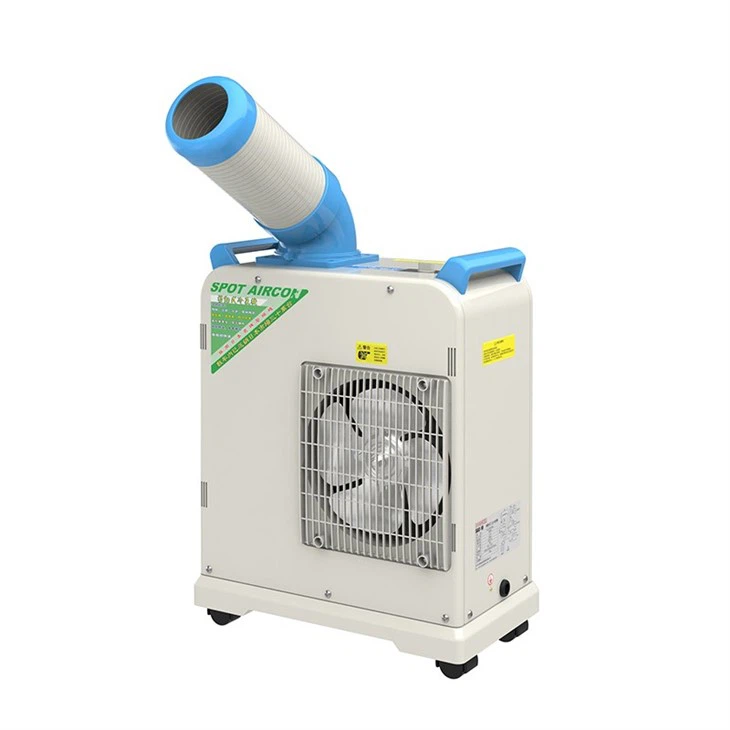
One of the advantages of air cooled systems is their simplicity and relatively low cost. They're also easy to install and maintain. However, they can be less efficient than water cooled systems, especially in hot climates. If you're looking for an air cooled solution, we offer a variety of options, including Outdoor Spot Cooler, Commercial Spot Cooler, and Equipment Cooling Spot Cooler.
How Water Cooled Systems Respond
Water cooled systems, as the name suggests, use water to remove heat from the refrigerant. These systems are often used in large commercial and industrial applications where high cooling capacities are required.
When a sudden load increase occurs in a water cooled system, the temperature of the refrigerant rises, just like in an air cooled system. The sensors detect this change and signal the compressor to increase its speed. However, the key difference lies in the heat rejection process. Instead of using air, water cooled systems use a cooling tower or a chiller to remove heat from the refrigerant.
As the load increases, the flow rate of water through the cooling tower or chiller is increased. This allows more heat to be transferred from the refrigerant to the water. The water is then circulated through the cooling tower, where it is cooled by evaporation. The cooled water is then returned to the system to continue the heat transfer process.
Water cooled systems are generally more efficient than air cooled systems, especially in hot environments. They can also handle larger load changes more effectively because water has a higher heat capacity than air. This means that it can absorb more heat without a significant increase in temperature.
When there's a sudden decrease in the load, the compressor slows down, and the water flow rate through the cooling tower or chiller is reduced. This helps to conserve water and energy. However, water cooled systems are more complex and expensive to install and maintain compared to air cooled systems. They also require a reliable source of water, which can be a challenge in some areas.
Factors Affecting System Response
There are several factors that can affect how water and air cooled systems respond to sudden load changes. One of the most important factors is the system's capacity. A system that is properly sized for the expected load will be able to handle sudden changes more effectively than an undersized system.
The type of compressor used in the system also plays a role. Compressors with variable speed drives are more responsive to load changes than fixed speed compressors. Variable speed compressors can adjust their speed based on the load, which allows for more precise control of the cooling process.

The location of the system is another factor. In hot climates, air cooled systems may struggle to maintain their efficiency during sudden load increases. On the other hand, water cooled systems may face challenges if there is a shortage of water.
Importance of Proper System Design and Maintenance
Proper system design and maintenance are crucial for ensuring that water and air cooled systems can respond effectively to sudden load changes. During the design phase, it's important to accurately calculate the expected load and choose a system with the appropriate capacity. This includes considering factors such as the size of the space, the number of heat-generating equipment, and the ambient temperature.
Regular maintenance is also essential. This includes cleaning the heat exchangers, checking the refrigerant levels, and ensuring that the fans and pumps are working properly. A well-maintained system will operate more efficiently and be better able to handle sudden load changes.
Conclusion
In conclusion, both water and air cooled systems have their own ways of responding to sudden load changes. Air cooled systems are simple and cost-effective, but they may be less efficient and have more difficulty handling large load changes. Water cooled systems are more efficient and can handle larger load changes, but they are more complex and expensive.
If you're in the market for a cooling system and want to ensure that it can handle sudden load changes effectively, I'd be happy to help. Whether you need an air cooled spot cooler or a large water cooled chiller, we have the expertise and products to meet your needs. Feel free to reach out to us to discuss your requirements and start the procurement process.
References
- ASHRAE Handbook - Refrigeration. American Society of Heating, Refrigerating and Air-Conditioning Engineers.
- "Fundamentals of HVACR" by Joseph E. Lstiburek and John W. Carmody.
- Various technical documents from leading cooling system manufacturers.


