


As a supplier of portable air conditioners, I often receive inquiries from customers about the performance of our products in high - humidity environments. It's a crucial question, as high humidity can significantly affect the comfort level in a space, and people want to know if a portable AC can effectively address both the heat and the moisture in the air.
How Portable ACs Work in General
Before delving into the performance in high - humidity conditions, let's understand the basic working principle of a Portable Air Conditioner. A portable AC functions by taking in warm air from the room, passing it over a set of cold coils (evaporator coils). As the warm air comes into contact with these cold coils, the heat is transferred from the air to the refrigerant inside the coils. The cooled air is then blown back into the room, while the heat absorbed by the refrigerant is released outside through a vent hose.
In addition to cooling, portable ACs also have a dehumidifying effect. When the warm, moist air passes over the cold evaporator coils, the water vapor in the air condenses into liquid water. This water collects in a reservoir within the unit, which needs to be emptied periodically.
Performance in High Humidity
Cooling Capacity
In high - humidity environments, the cooling performance of a portable AC can be somewhat compromised. The reason lies in the fact that the latent heat of vaporization of water is quite high. When there is a large amount of moisture in the air, the portable AC has to work harder to cool the air. A significant portion of its energy is used to condense the water vapor rather than just lowering the temperature of the air.
For example, if you have a room with a high humidity level of 80% and a temperature of 30°C (86°F), the portable AC will first focus on removing the moisture. As a result, it may take longer to reach the desired temperature compared to a situation where the humidity is lower. However, this doesn't mean that portable ACs are ineffective in high - humidity areas. With proper sizing and operation, they can still provide a noticeable improvement in comfort.
Dehumidification
On the positive side, portable ACs are quite effective at dehumidifying in high - humidity conditions. The cold evaporator coils act as a natural dehumidifier. As the warm, humid air passes over them, the water vapor quickly condenses. For small to medium - sized rooms, a well - functioning portable AC can reduce the humidity level to a more comfortable range, typically between 40% and 60%.
It's important to note that the dehumidification rate of a portable AC can vary depending on its size and capacity. Larger units generally have a higher dehumidification rate. For instance, a high - end Portable Industrial AC can remove a substantial amount of moisture from large industrial spaces, making it suitable for warehouses or factories in humid regions.
Air Circulation
Another factor that contributes to the effectiveness of portable ACs in high - humidity areas is air circulation. Portable ACs are designed to blow cooled air into the room, which helps in mixing the air and reducing stagnant pockets of warm, humid air. This continuous air movement not only makes the room feel cooler but also aids in the dehumidification process. By ensuring proper air circulation, the portable AC can reach all corners of the room, preventing the buildup of moisture in certain areas.
Factors Affecting Portable AC Performance in High Humidity
Room Size
The size of the room plays a crucial role in determining how well a portable AC will perform in high - humidity conditions. If the room is too large for the capacity of the portable AC, it will struggle to cool and dehumidify effectively. The unit will have to work overtime, which can lead to increased energy consumption and a shorter lifespan. On the other hand, if the room is too small, the portable AC may cycle on and off too frequently, which can also affect its overall performance.
Ventilation
Proper ventilation is essential for the optimal performance of a portable AC in high - humidity environments. If the room is poorly ventilated, the moisture removed by the portable AC has nowhere to go, and the humidity level may not decrease as expected. Additionally, poor ventilation can cause the unit to overheat, reducing its efficiency. It's recommended to keep a window slightly open or use an exhaust fan to allow the moist air to escape.
Unit Maintenance
Regular maintenance of the portable AC is vital, especially in high - humidity areas. The evaporator coils can accumulate dirt and debris over time, which can reduce their ability to cool and dehumidify. The water reservoir also needs to be emptied regularly to prevent overflow and mold growth. A dirty air filter can also restrict air flow, making the unit work harder and less efficiently. By performing routine maintenance, such as cleaning the coils, changing the air filter, and emptying the water reservoir, you can ensure that your portable AC operates at its best in high - humidity conditions.
Applications in High - Humidity Settings
Residential Use
In residential settings, portable ACs are a popular choice for bedrooms, living rooms, or small apartments in high - humidity regions. They can provide a cost - effective and convenient way to cool and dehumidify a specific area. For example, in coastal areas where the humidity is often high, a Portable Air Conditioner can make the living space more comfortable. It can be easily moved from one room to another, depending on your needs.
Industrial Use
In industrial settings, high humidity can cause problems such as corrosion, mold growth, and damage to equipment. Portable Industrial AC units are designed to handle large - scale dehumidification and cooling. They can be used in warehouses, manufacturing plants, and data centers to maintain a stable and comfortable environment. These units are often more powerful and have larger water reservoirs to handle the high moisture levels in industrial spaces.
Outdoor Use
For outdoor events or work areas, Outdoor AC units can be a great solution. In high - humidity outdoor environments, such as during summer festivals or construction sites, these portable ACs can provide a cool and dry oasis. They are typically designed to be weather - resistant and can operate effectively in a variety of outdoor conditions.
Conclusion
In conclusion, portable ACs can work effectively in high - humidity environments, but their performance depends on several factors. While the cooling capacity may be slightly affected, the dehumidification function is a significant advantage. By considering factors such as room size, ventilation, and unit maintenance, you can ensure that your portable AC provides optimal comfort in high - humidity conditions.

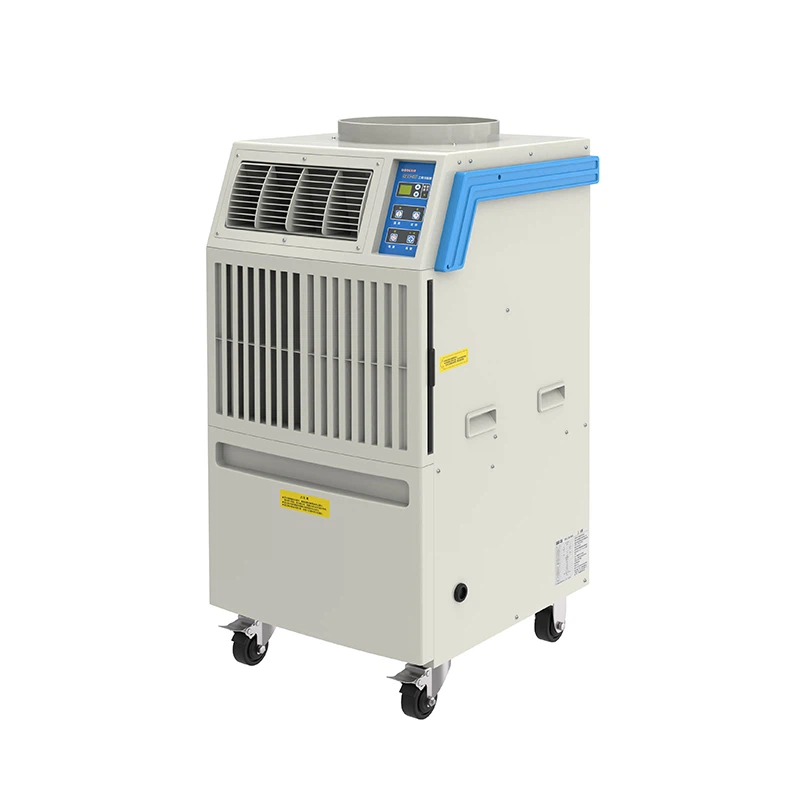
If you are interested in purchasing a portable AC for your high - humidity space, we are here to help. Our team of experts can assist you in selecting the right unit based on your specific needs. Whether it's a small residential unit or a large - scale industrial solution, we have a wide range of products to meet your requirements. Contact us today to start a discussion about your portable AC needs and take the first step towards a more comfortable and dry environment.
References
- ASHRAE Handbook - Fundamentals. American Society of Heating, Refrigerating and Air - Conditioning Engineers.
- "The Impact of Humidity on Air Conditioning Systems" by HVAC Research Journal.
- Manufacturer's manuals for various portable air conditioner models.


